OpenClaw, NemoClaw & Hermes: Why AI Agents Are the Next SMB Revolution
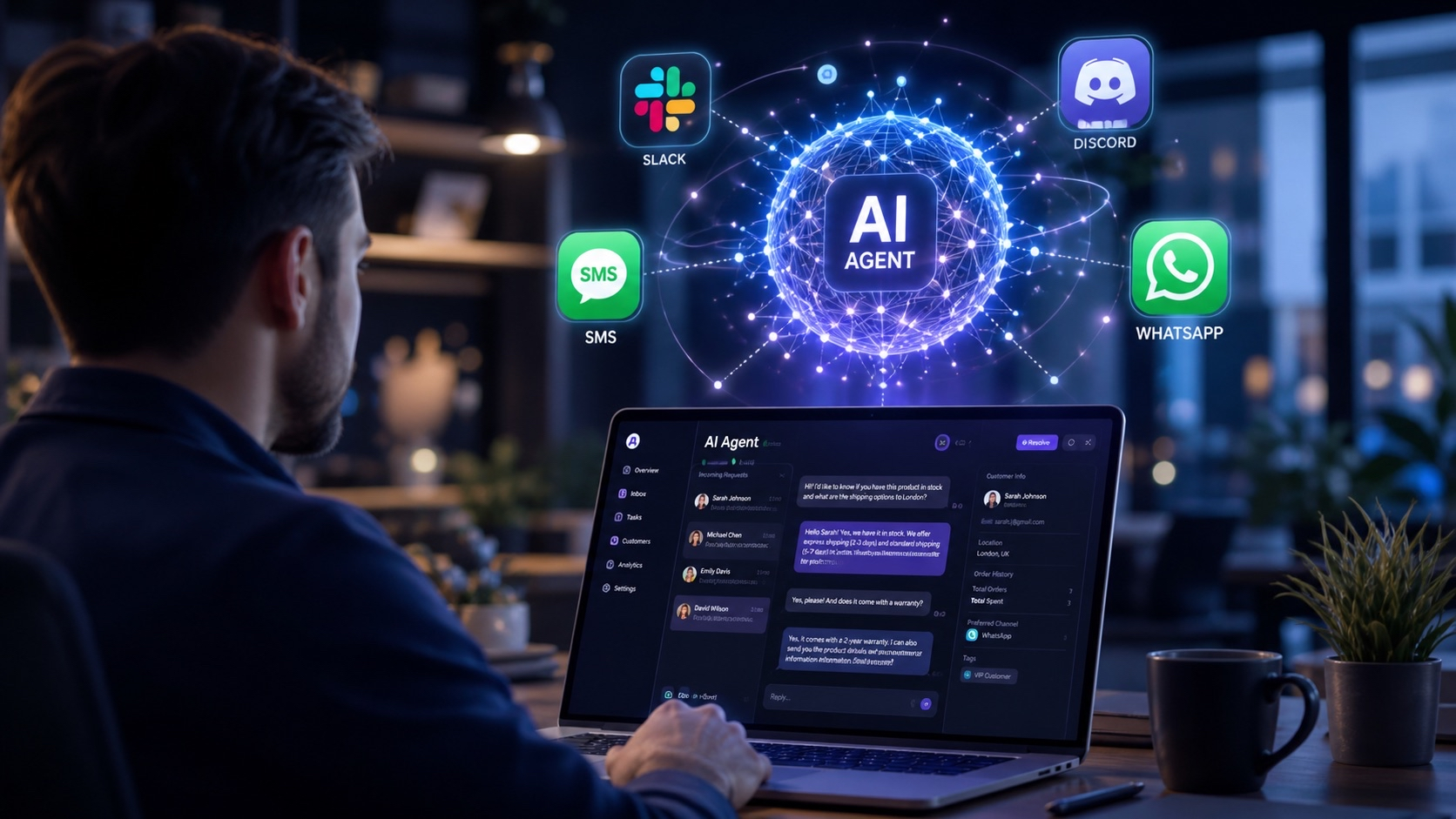
Every few years, a technology comes along that shifts what's possible for small businesses. Cloud hosting. SaaS tools. AI assistants. AI agents are the next wave — and unlike some previous hype cycles, this one has real substance underneath it.
OpenClaw, NemoClaw, and Hermes are agent frameworks that let businesses automate complex, multi-step workflows without writing code from scratch or paying enterprise software prices. They can handle customer inquiries, process documents, manage internal workflows, and integrate with your existing tools. The catch? Deployment is non-trivial, security configuration is easy to get wrong, and ongoing management takes real expertise.
This post breaks down what these platforms actually do, where they genuinely help SMBs, and what you need to know before you sign up for another SaaS tool that promises to "automate everything."
What Are OpenClaw, NemoClaw, and Hermes?
These are three related but distinct agent frameworks, all built with a similar philosophy: give businesses powerful AI agents that can be customized, deployed in your own environment, and connected to your specific tools and data.
OpenClaw is the base platform — a flexible agent framework that supports multiple communication channels (Discord, Slack, web, API) and can be extended with custom skills. It's the foundation most deployments start from.
NemoClaw is OpenClaw's security-hardened sibling. It adds permission scoping, comprehensive audit logging, and least-privilege configuration out of the box. If you're handling any sensitive data — customer information, financial records, health data — NemoClaw is the right starting point.
Hermes is the orchestration and management layer. It handles agent coordination, workflow management, and the ongoing tuning that keeps agents performing well over time.
Together, they form a stack that can power real business workflows. The platforms themselves are legitimate and actively maintained — not vaporware or abandoned open-source projects.
Where AI Agents Actually Help SMBs
The honest answer is: it depends on your workflow. Agents work best when you have repetitive, rule-based processes that currently require human time but don't require human judgment for every step.
Customer service automation is the most common use case for a reason. An agent can handle initial customer inquiries, route complex issues to the right person, and follow up on pending requests — without your team repeating the same responses 40 times a week.
Document processing is another strong fit. If you're reviewing contracts, intake forms, applications, or any structured documents with consistent formats, an agent can extract relevant information, populate your systems, and flag items that need human attention.
Internal workflow automation covers a lot of ground: onboarding sequences, HR workflows, IT ticket routing, vendor communication, and data entry across disconnected systems. The more tools you use, the more value agents can add by connecting them.
Sales and recruiting operations benefit significantly. Agents can screen resumes, schedule interviews, send follow-up emails, and manage candidate communication — tasks that eat hours of your team's week but don't require deep human judgment for the initial stages.
The Gap Between "It Works in Demo" and "It Works in Production"
Here's what the vendor pitch won't tell you: an agent that works in a clean demo environment often breaks in your actual production setup.
Agents interact with real systems — your CRM, your email, your database, your API endpoints. Those integrations are idiosyncratic. Your data isn't clean. Your users make unexpected choices. Your vendors change their APIs. A production agent needs error handling, fallbacks, monitoring, and regular tuning that demos don't show.
Security is the other place where production reality diverges from demos. Out of the box, agent frameworks often have permissive default configurations. An agent with overly broad permissions can, in the worst case, access or modify data it shouldn't. NemoClaw's security hardening exists precisely because of these risks — but someone needs to configure it correctly.
This is why professional deployment matters. The gap between "agent runs" and "agent runs reliably, securely, and actually solves your problem" is substantial.
What Professional Setup Actually Involves
A proper deployment isn't just installing software and turning it on. Here's what a serious setup engagement actually covers:
Environment assessment. Before touching any code, your provider should understand your current stack, identify integration points, and determine what data the agent will handle. This shapes security configuration and skill development.
Agent installation and configuration. Installing the agent itself is straightforward. Configuring it for your specific environment — channel integrations, authentication, response parameters, memory management — is where the work actually is.
Custom skill development. Off-the-shelf agents do off-the-shelf things. If you need the agent to interact with your proprietary systems, follow your specific business processes, or handle your industry's particular requirements, someone needs to build those custom capabilities. This is typically the most time-intensive part of deployment.
Security hardening. For NemoClaw specifically, this means configuring least-privilege permissions, enabling audit logging, setting up rate limiting, and reviewing data handling patterns for PII protection. Skip this step and you're running unnecessary risk.
Integration testing. The agent works in isolation. Does it work when connected to your actual systems? Testing with real data, real users, and real edge cases is essential before go-live.
Validation and handoff. Confirming the agent handles the core workflows correctly, documenting its behavior, and training your team on how to work with it.
Most standard setups take one to two weeks. Complex configurations with multiple integrations, custom skills, or security hardening can take three to four weeks.
The Ongoing Management Problem
Here's the part that most "deploy and leave" engagements get wrong: agents need ongoing management.
Models drift. Your business changes. New edge cases emerge. Dependencies update. Without regular attention, an agent that worked perfectly at launch gradually degrades — responses get less accurate, edge cases accumulate, and performance degrades in ways that aren't immediately obvious.
Ongoing management typically includes:
- Monthly performance reviews and prompt tuning
- Software updates and dependency management
- New capability deployment as your needs evolve
- Monitoring for unexpected behavior
- Priority support when things go wrong
This is the difference between an agent that's a genuine operational asset and one that becomes a liability you eventually have to disable.
What This Actually Costs
Pricing varies based on complexity, but here's the honest breakdown:
Setup is a one-time engagement. The range depends on how many integrations you need, whether you're building custom skills, and how much security hardening is required. Complex setups with multiple integrations and custom development cost more than a basic single-channel deployment.
Ongoing management is typically a monthly retainer. This covers updates, monitoring, tuning, and support. Emergency response SLAs — typically a few hours for critical issues — are part of the package at most serious providers.
The comparison isn't "AI agents vs. hiring more staff." It's "AI agents vs. the cost of your team spending hours per week on tasks that could be automated." For most SMBs, the math works — but only if the agent is deployed and managed properly.
Industries Already Using AI Agents
Adoption is across the board. Here are the sectors we see most active:
Professional services — law firms, accounting practices, consultancies. Client intake, document drafting, research assistance, and scheduling automation. These businesses deal with high-value, information-heavy workflows that are natural agent territory.
E-commerce and retail — product research, customer service, inventory inquiries, order status updates. Retail operations generate enormous volumes of repetitive customer interactions that agents handle well.
Healthcare and wellness — patient intake, appointment scheduling, health coach workflows. The critical constraint here is HIPAA compliance, which requires careful security configuration and data handling review.
Logistics and trade — shipment tracking, vendor communication, customs documentation. Freight and logistics companies have complex, multi-party workflows with significant automation potential.
Contractors and trades — job scheduling, estimate follow-ups, customer communication, parts procurement. Field service businesses often have lean administrative teams that agents can meaningfully augment.
Staffing and recruiting — resume screening, candidate outreach, interview scheduling, onboarding sequences. High-volume hiring operations see the fastest ROI from agent deployment.
FAQ
What's the difference between OpenClaw, NemoClaw, and Hermes?
OpenClaw is the base agent framework. NemoClaw is a security-hardened variant with audit logging, permission scoping, and least-privilege configuration built in. Hermes is the orchestration and management layer that handles workflow coordination and ongoing tuning. Most serious deployments use all three together.
How long does initial setup take?
Most standard setups complete within one to two weeks. Complex configurations with custom skills, multiple integrations, or security hardening typically take three to four weeks. We give you a clear timeline during the scoping call.
Can you build custom skills for my specific business?
Yes. Custom skill development is one of our core offerings. We connect your agent to your internal systems, build workflows around your business processes, and create specialized capabilities that generic agents can't provide.
Is my data safe with AI agents?
We take security seriously, especially for NemoClaw deployments. We configure least-privilege permissions, enable comprehensive audit logging, and review data handling patterns to ensure PII and business data are protected. Security isn't an afterthought — it's built into the deployment from day one.
What's the difference between setup and ongoing management?
Setup is a one-time engagement: we install your agent, configure it for your environment, build any custom skills you need, and validate that it works. Management is an ongoing retainer: we keep everything running, tune it over time, and add new capabilities as your needs evolve.
What happens when something breaks or the agent behaves unexpectedly?
Management retainer clients get priority support. For emergency issues, we respond within two hours. For standard concerns, we address them in the next business day and track all incidents in your shared dashboard.
Do I need to be technical to work with an AI agent?
No. We handle all the technical deployment and ongoing management. Your team needs to understand how to work with the agent — what it can and can't do, how to review its outputs, when to escalate — but you don't need a technical background to use one.
Bottom Line
AI agents are real, they're powerful, and SMBs can absolutely benefit from them — but only if they're deployed and managed properly. The gap between a demo that impresses you and a production system that actually solves your business problems is significant.
If you're considering AI agents for your business, the right move is a honest conversation about your specific workflows, your existing tools, and what success actually looks like. Not every process is a good fit for automation, and a provider who tells you otherwise isn't being straight with you.
We're happy to have that conversation. Schedule a scoping call and we'll give you a clear picture of what's possible, what's realistic, and what it'll actually cost.
Frequently Asked Questions
- What are OpenClaw, NemoClaw, and Hermes?
- OpenClaw is a flexible AI agent framework supporting multiple channels (Discord, Slack, web, API). NemoClaw is the security-hardened variant with permission scoping and audit logging. Hermes is the orchestration and management layer for ongoing tuning and workflow coordination. They work together as a complete stack.
- How long does initial setup take?
- Most standard setups complete within 1-2 weeks. Complex configurations with custom skills, multiple integrations, or security hardening typically take 3-4 weeks. We give you a clear timeline during the scoping call.
- Can you build custom skills specific to my business?
- Yes. Custom skill development is one of our core offerings. We connect your agent to your internal systems, build workflows around your business processes, and create specialized capabilities that generic agents can't provide.
- Is my data safe with AI agents?
- We take security seriously, especially for NemoClaw deployments. We configure least-privilege permissions, enable comprehensive audit logging, and review data handling patterns to ensure PII and business data are protected.
- What's the difference between setup and ongoing management?
- Setup is a one-time engagement: we install your agent, configure it for your environment, build any custom skills you need, and validate that it works. Management is an ongoing retainer: we keep everything running, tune it over time, and add new capabilities as your needs evolve.